



Weaving Machinery
Our Textile Machinery solutions are engineered to deliver high productivity, consistent quality, and efficient processing across every stage of textile manufacturing. Designed with advanced technology and robust construction, our machines support modern textile units in achieving faster production, reduced wastage, and superior fabric quality.
We cater to spinning, weaving, processing, dyeing, finishing, and garment production industries with reliable and performance-driven machinery.
Textile Machinery plays a vital role in transforming raw fibers into finished fabrics and garments. Our machines are designed to handle continuous operations with precision, ensuring uniform output, energy efficiency, and long service life even under demanding production conditions.
Each solution is customizable to meet specific fabric types, production volumes, and automation requirements, making them suitable for small units as well as large-scale textile plants.
Weaving Machinery
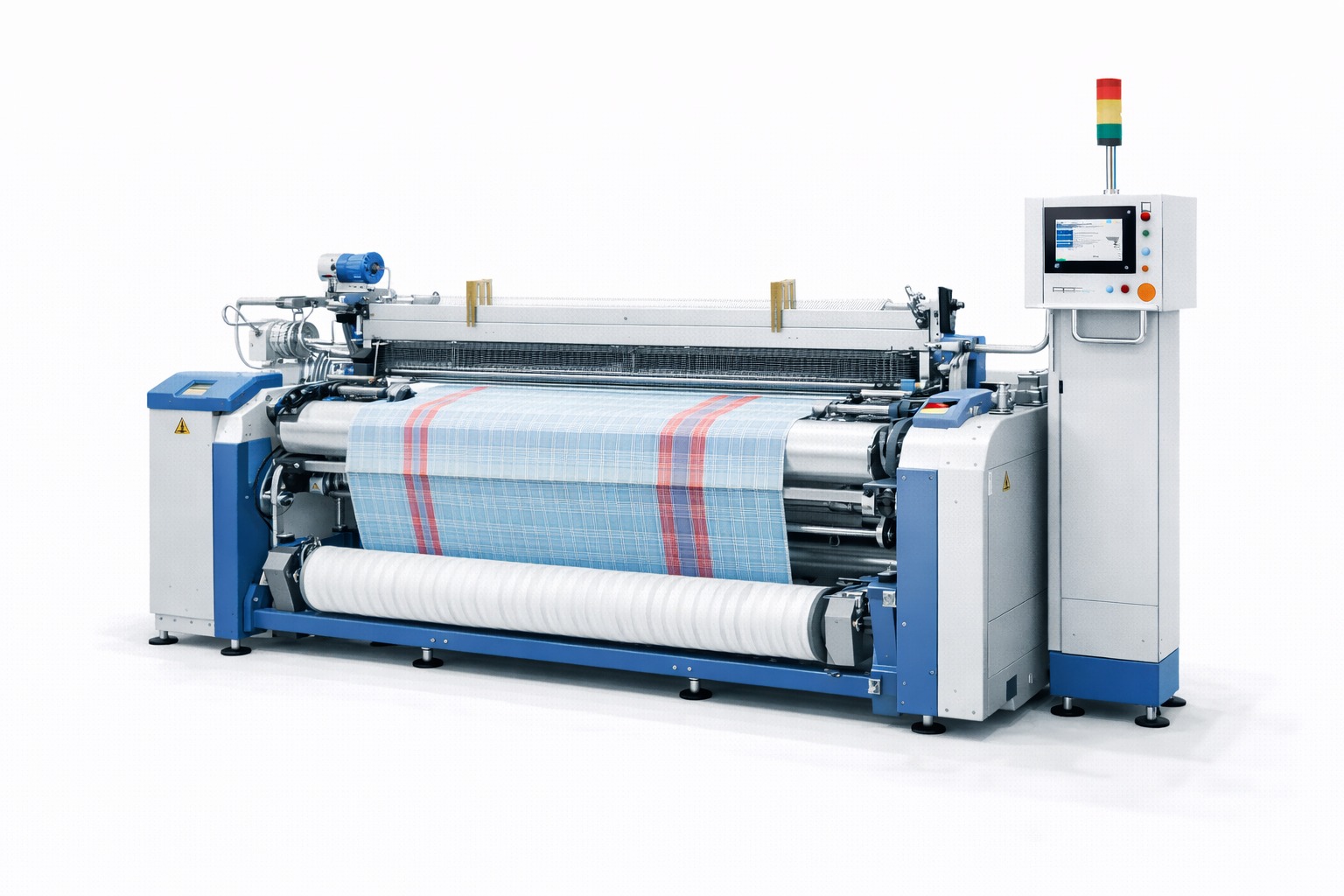
Our Weaving Machinery range is designed to deliver high-speed fabric production, superior fabric quality, and operational efficiency for modern textile mills. These machines are engineered to handle a wide variety of yarns and fabric types, ensuring consistent performance, reduced downtime, and long-term reliability.
We offer advanced weaving solutions suitable for cotton, synthetic, blended, and specialty fabrics, catering to small weaving units as well as large-scale textile manufacturers.
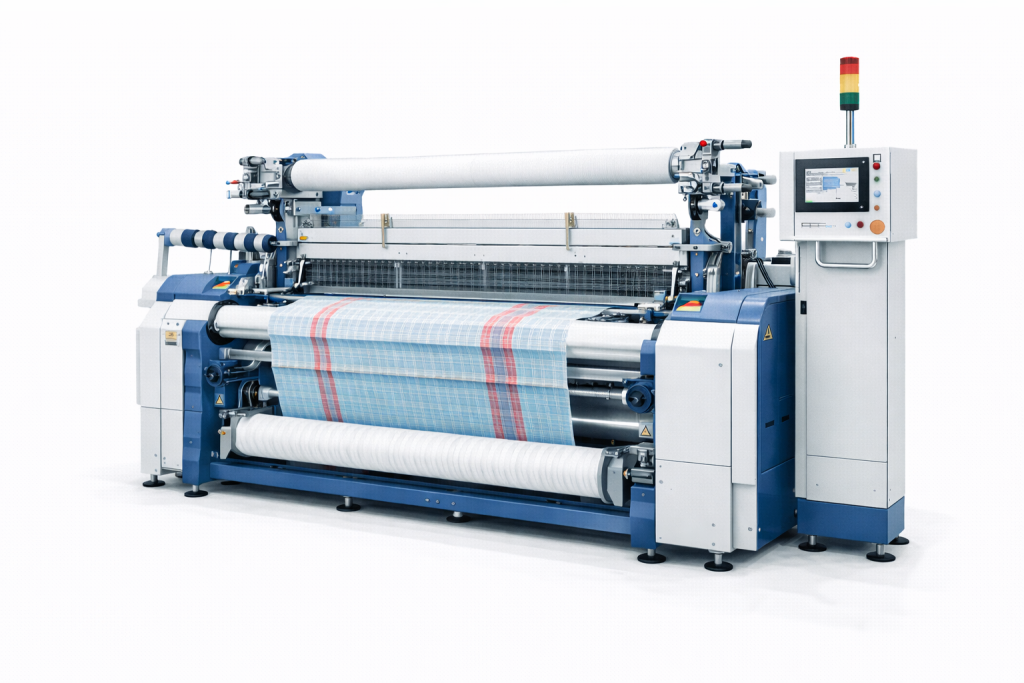
Rapier Looms
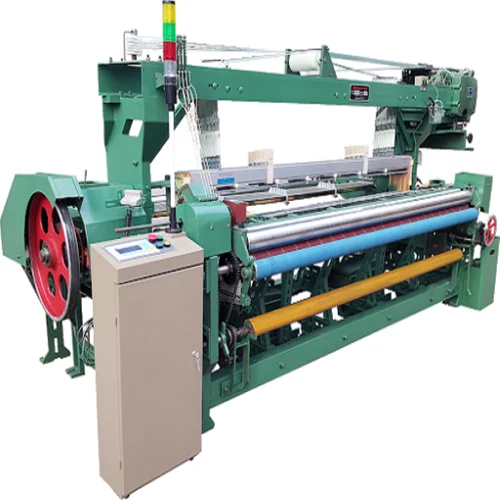
Rapier Looms are versatile weaving machines known for their ability to handle a wide range of yarn types and fabric constructions. They are ideal for producing high-quality woven fabrics with complex patterns and designs.
Rapier looms use flexible or rigid rapiers to transfer the weft yarn across the shed, ensuring precise and controlled insertion. Their adaptability makes them suitable for both simple and intricate fabric designs.
Key Features
- Suitable for cotton, wool, silk, synthetic & blended yarns
- Excellent control over weft insertion
- Supports complex patterns and designs
- Low yarn stress and minimal breakage
- Stable operation with consistent fabric quality
Applications
- Apparel fabrics
- Home textiles (curtains, upholstery)
- Technical and industrial textiles
- Decorative and designer fabrics
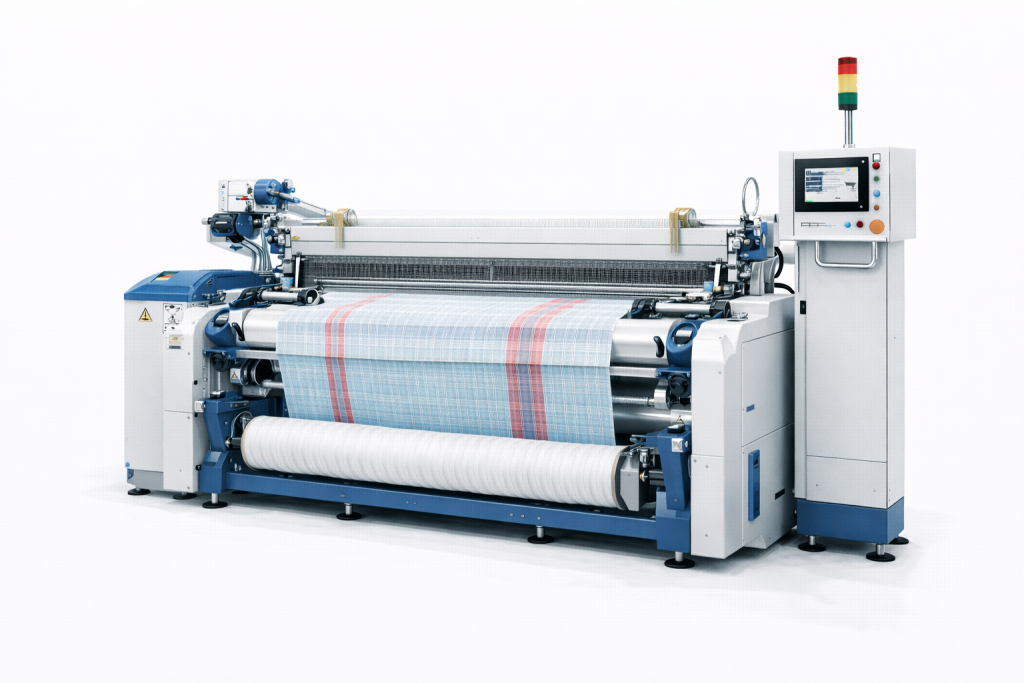
Air Jet Looms
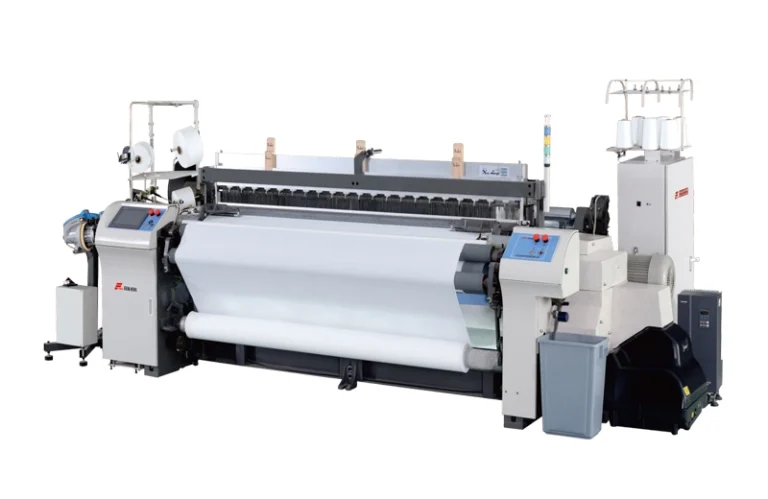
Air Jet Looms are high-speed weaving machines designed for mass production of fabrics with excellent efficiency and uniform quality.
Air jet looms use compressed air to insert the weft yarn, allowing extremely high weaving speeds. They are best suited for lightweight to medium-weight fabrics where productivity is a priority.
Key Features
- Very high production speed
- Low vibration and smooth operation
- Excellent fabric uniformity
- Energy-efficient air management systems
- Minimal mechanical wear
Applications
- Cotton and blended fabrics
- Bed linen and sheeting
- Apparel and shirting fabrics
- Large-volume textile production
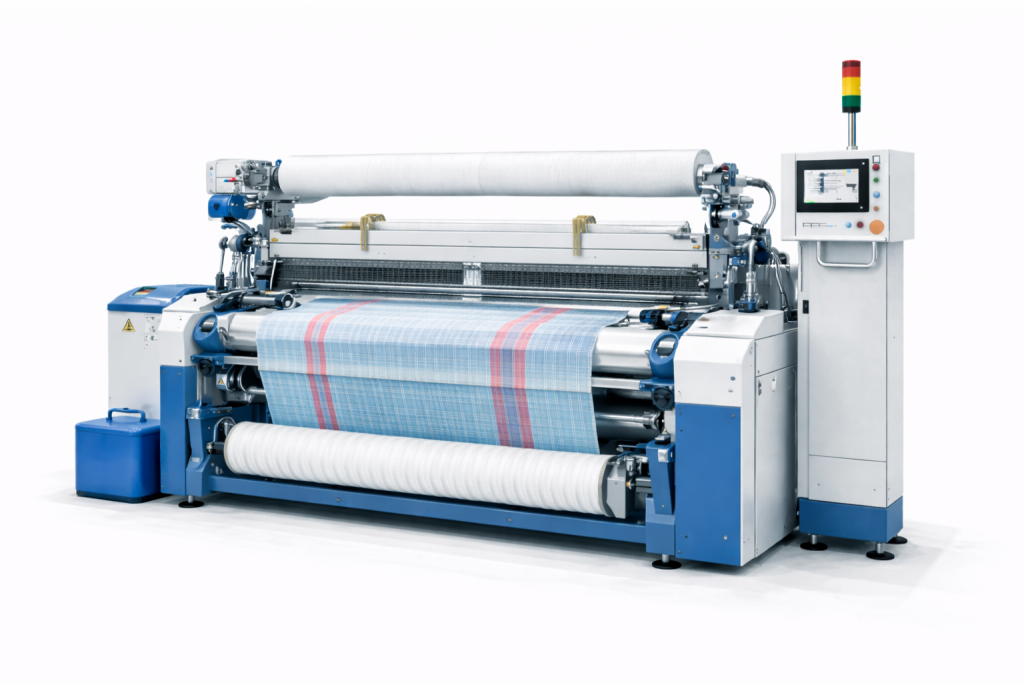
Water Jet Looms
Water Jet Looms are specialized weaving machines used for high-speed weaving of synthetic filament yarns.
Water jet looms use a fine jet of water to carry the weft yarn across the warp. These looms provide exceptional speed and efficiency for hydrophobic yarns.
Key Features
- Extremely high weaving speed
- Low energy consumption
- Smooth and quiet operation
- Simple mechanical structure
- High production efficiency
Applications
- Polyester and nylon fabrics
- Taffeta and lining fabrics
- Industrial synthetic textiles
- Lightweight synthetic materials
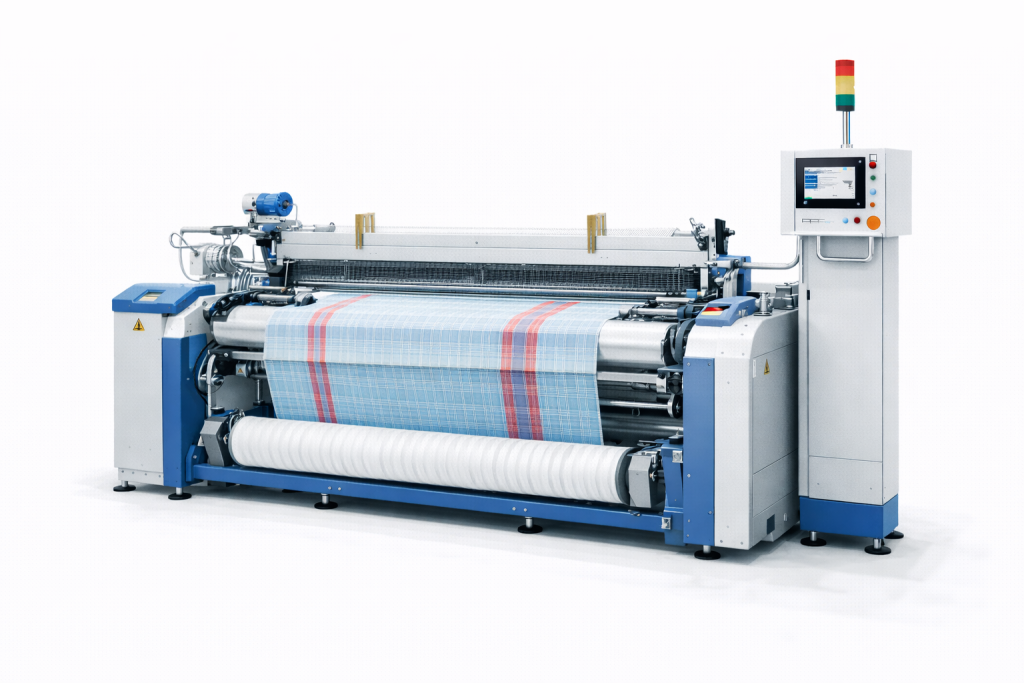
Power Looms
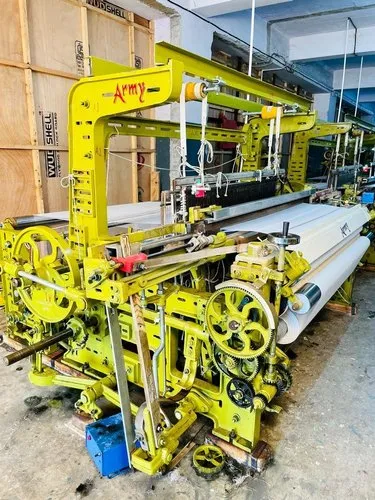
Power Looms are widely used traditional weaving machines suitable for cost-effective fabric production, especially in small to medium-scale weaving units.
Power looms use mechanical power to insert the weft yarn and produce fabric efficiently. They are known for their simplicity, durability, and economical operation.
Key Features
- Simple and rugged construction
- Easy operation and maintenance
- Suitable for various fabric widths
- Cost-effective weaving solution
- Long service life
Applications
- Cotton and blended fabrics
- Grey and processed fabrics
- Small and medium textile units
- Traditional and commercial weaving