



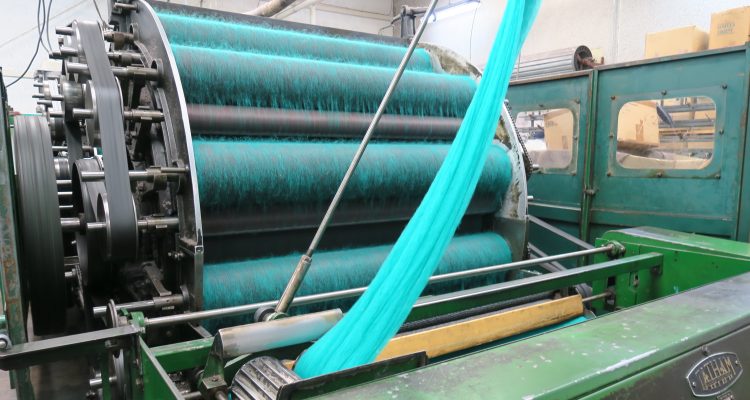
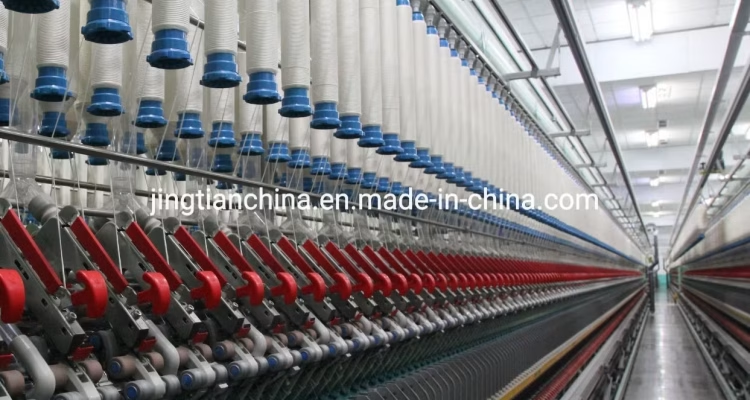
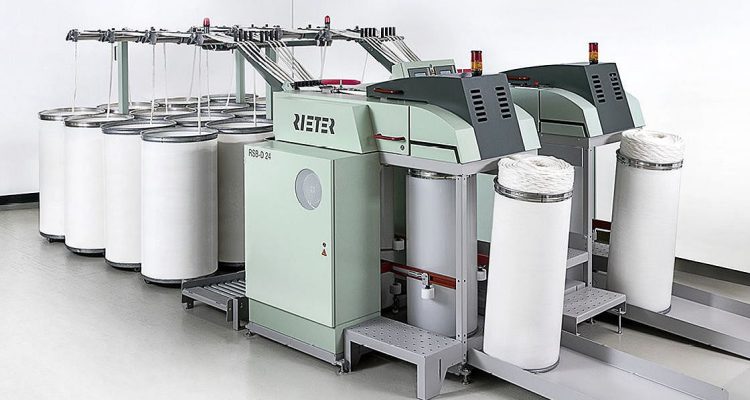
Spinning Machinery
Our Spinning Machinery range is designed to deliver high-quality yarn production, process consistency, and operational efficiency across modern textile spinning mills. Each machine plays a critical role in transforming raw fibers into uniform, strong, and defect-free yarns suitable for a wide range of textile applications.
These machines are ideal for cotton, synthetic, blended, and specialty fibers, supporting both medium-scale and large-scale spinning operations.
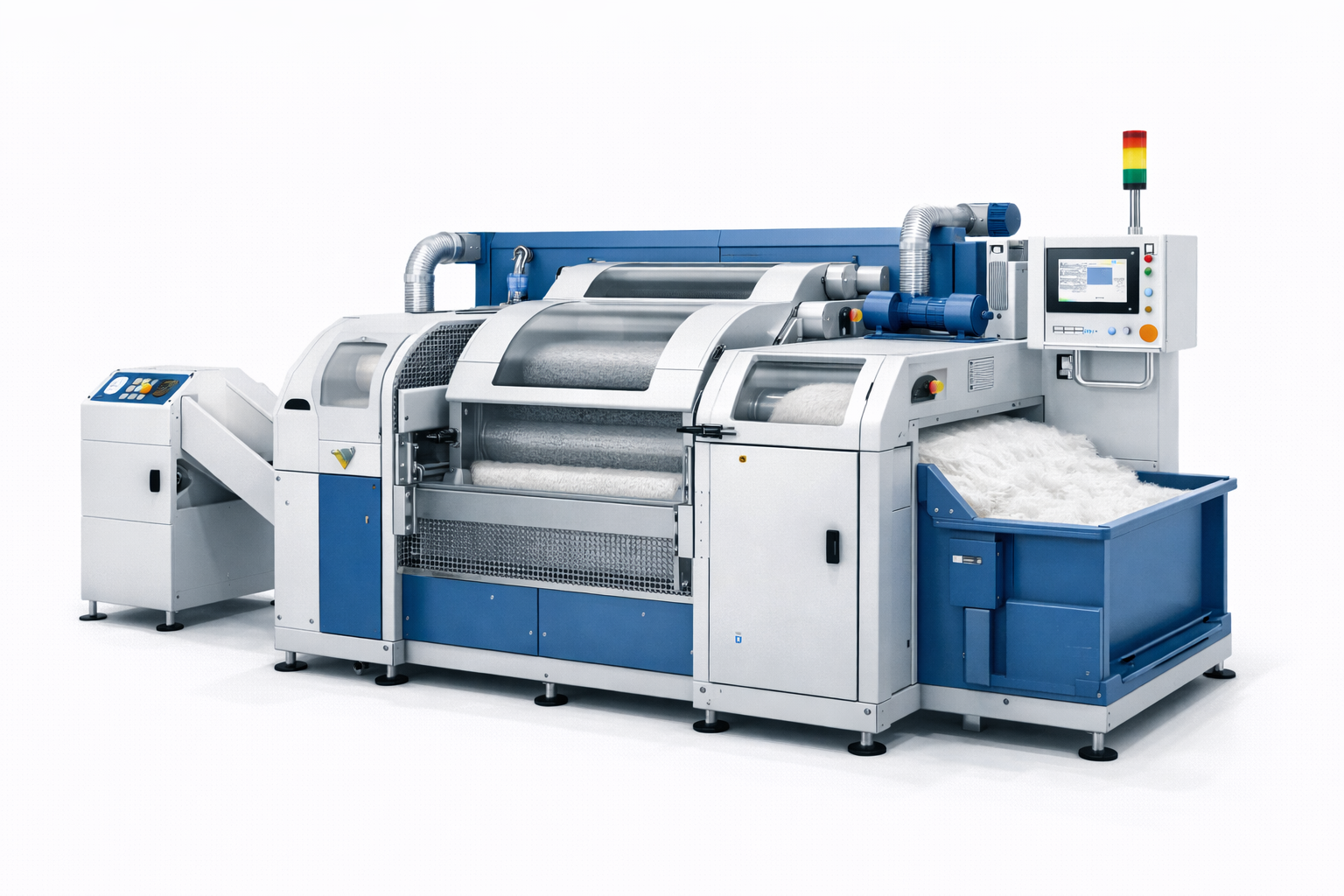
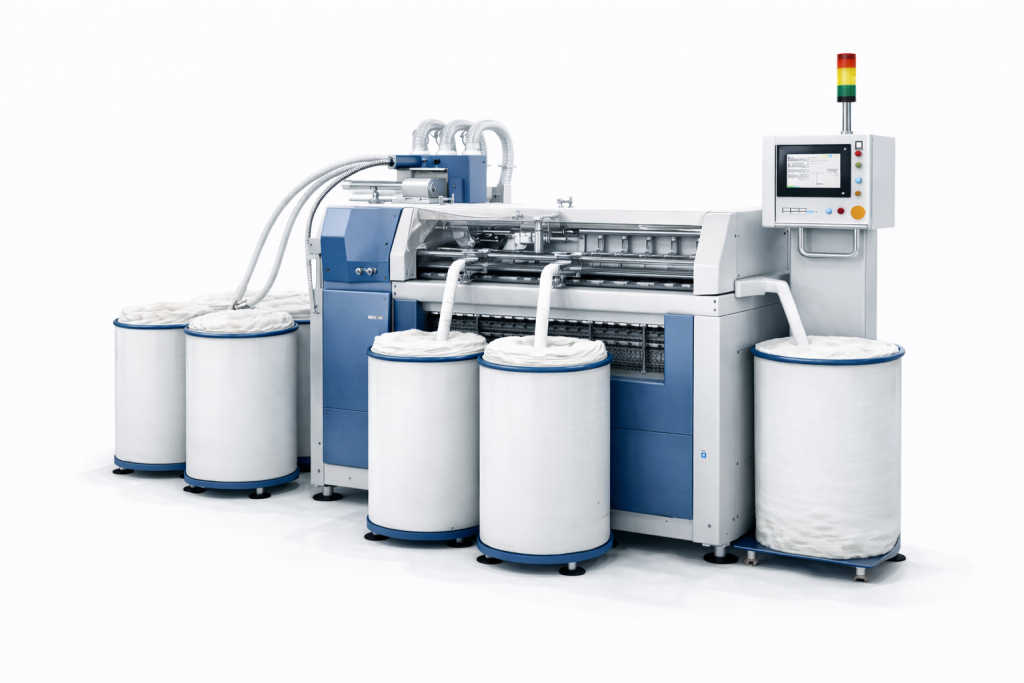
Carding Machines
Carding Machines are the foundation of the spinning process, responsible for fiber opening, cleaning, and parallelization.
Carding machines convert raw fiber into a uniform sliver by removing impurities and aligning fibers. They significantly improve fiber quality and prepare material for downstream processes.
Key Features
- Efficient removal of dust, trash, and short fibers
- Excellent fiber individualization and alignment
- High production capacity with consistent sliver quality
- Reduced fiber damage and wastage
- Robust construction for continuous operation
Applications
- Cotton and blended fiber processing
- High-quality yarn preparation
- Compact and ring spinning lines
Draw Frame
Rapier Looms are versatile weaving machines known for their a
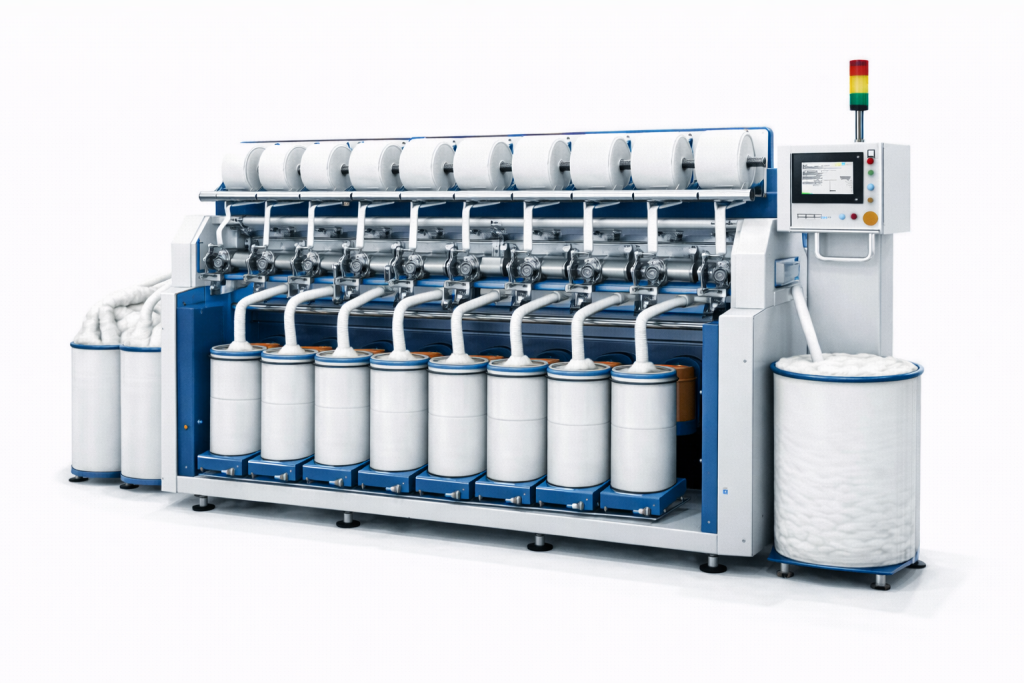
Draw Frames improve sliver evenness and uniformity by doubling and drafting fibers.
Draw frames straighten fibers, equalize mass variation, and improve sliver consistency, ensuring superior yarn quality in later spinning stages.
bility to handle a wide range of yarn types and fabric constructions. They are ideal for producing high-quality woven fabrics with complex patterns and designs.
Rapier looms use flexible or rigid rapiers to transfer the weft yarn across the shed, ensuring precise and controlled insertion. Their adaptability makes them suitable for both simple and intricate fabric designs.
Key Features
- Accurate drafting and leveling system
- High delivery speed with precise control
- Improved sliver uniformity and strength
- Automation-ready with monitoring systems
- Energy-efficient operation
Applications
- Carded and combed sliver processing
- Ring and rotor spinning preparation
- Fine and medium yarn production
Comber Machines
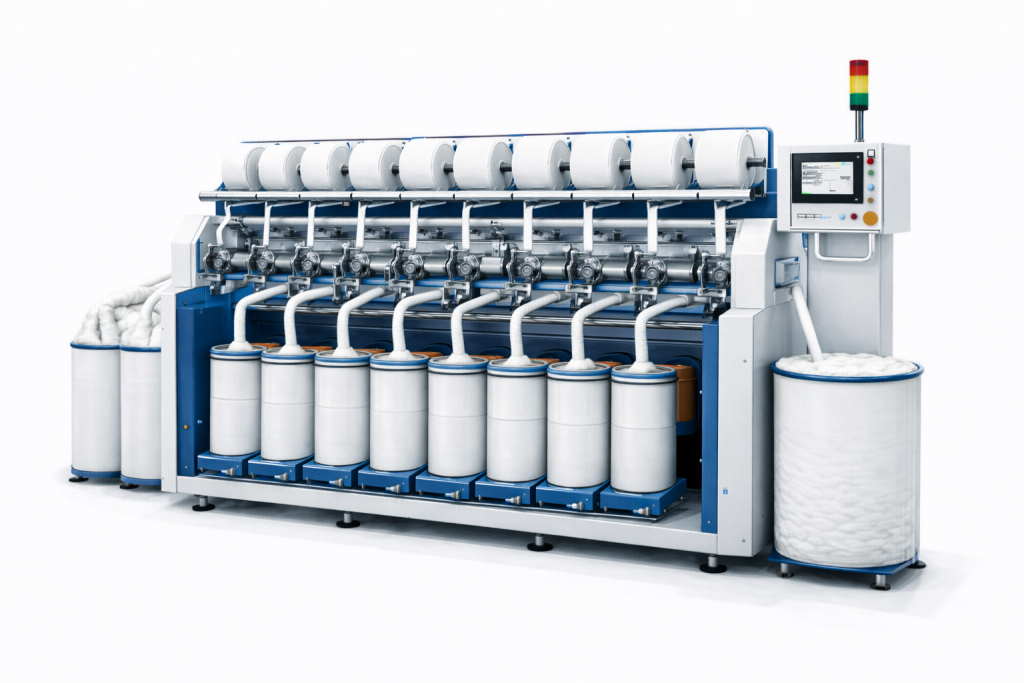
Comber Machines are used for producing premium-quality yarns by removing short fibers and remaining impurities.
Combing improves fiber length uniformity, strength, and smoothness, resulting in finer and stronger yarns with superior appearance.
Key Features
- Effective removal of short fibers (noil)
- Improved yarn strength and uniformity
- Enhanced fabric appearance and softness
- High precision and stable performance
- Suitable for fine and high-count yarns
Applications
- Fine cotton yarns
- High-quality apparel fabrics
- Premium home textiles
Roving Frame
Roving Frames convert sliver into roving, providing the ideal fiber preparation for spinning.
Roving frames reduce sliver thickness and insert a slight twist, making fibers easy to handle and ready for final spinning.
Key Features
- Uniform roving formation
- Precise drafting and twisting control
- Reduced end breakage
- High spindle efficiency
- Smooth and stable operation
Applications
- Ring spinning preparation
- Cotton and blended yarn production
- Medium to fine yarn ranges
Ring Spinning Frame
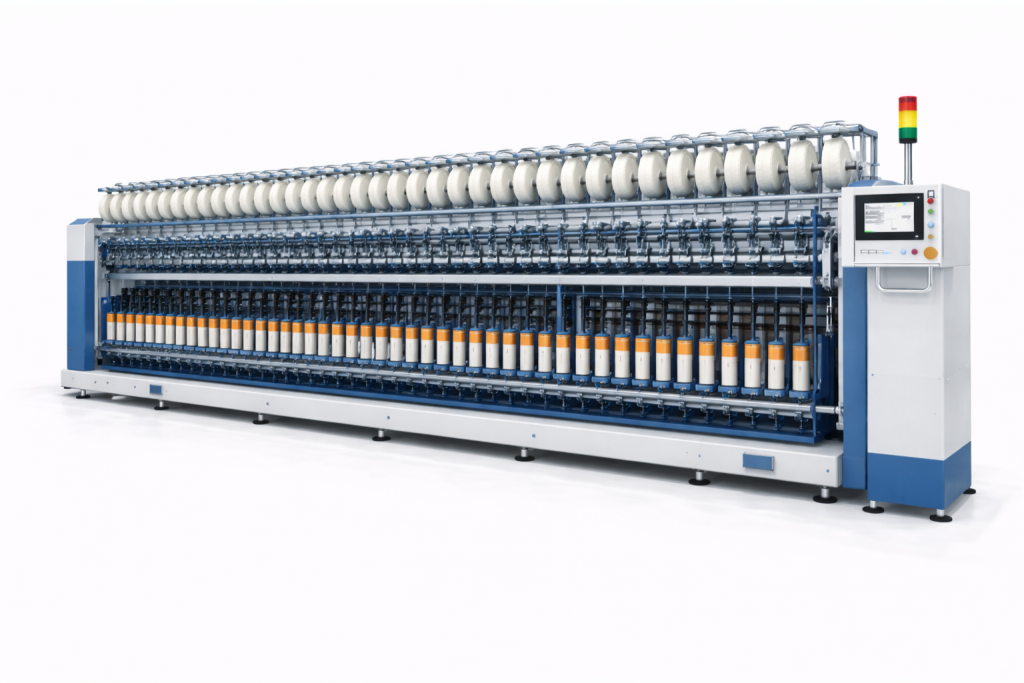
Ring Spinning Frames are the most widely used machines for producing high-strength and high-quality yarns.
Ring spinning frames convert roving into yarn by drafting and twisting fibers, producing yarns with excellent strength, uniformity, and versatility.
Key Features
- Superior yarn strength and quality
- Wide range of yarn counts
- Stable high-speed operation
- Advanced spindle and drafting systems
- Low maintenance and long service life
Applications
- Apparel and garment yarns
- Home textile yarns
- Industrial and technical yarns
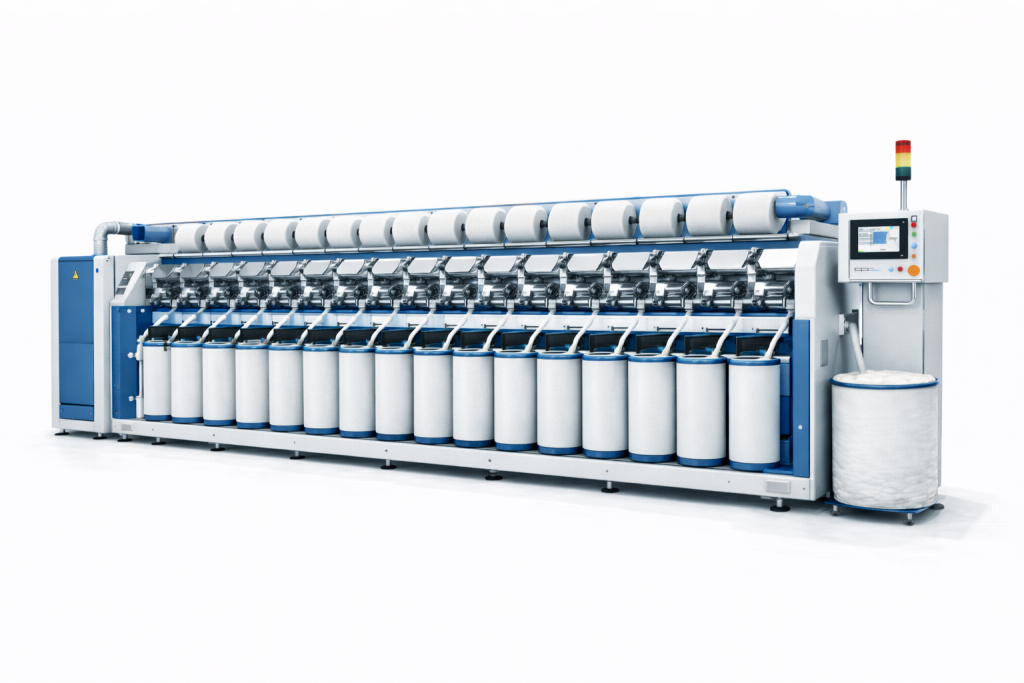
Open-End Spinning Machine
Open-End Spinning Machines (Rotor Spinning) are designed for high-speed, cost-effective yarn production.
These machines produce yarn directly from sliver without roving, reducing process steps while maintaining consistent yarn quality.
Key Features
- Very high production speed
- Reduced labor and energy consumption
- Uniform yarn quality with fewer process stages
- Easy operation and automation-ready
- Low operating cost
Applications
- Denim and woven fabrics
- Towel and home textile yarns
- Medium and coarse yarn counts